
Category: art as language
-
300 Days
My Verdun Triptych has now found a new home in a local public school, and there’s a story behind this dating back to the 1970’s. When I complete my degree course I was upset to be handed the application forms for a posts-graduate teaching course. This seemed like a vote of no-confidence by the college…
-
Log-In at the Towner
There is so much complexity and sensitivity in Nash’s work. The work builds on a relationship with the land, with Ffestiniog, and is rooted deeply in the past as well as reflecting an individual delight in materials and the workings of the natural environment. Nash is claimed as a minimalist in some writing. For others…
-
Basket Case
Scale is an important consideration in relation to the mark. I want to be able to put myself into the work and that means working with the whole body. As pieces get smaller so the ‘hinge’ around which the mark rotates changes. Small pieces use the wrist as the hinge, then it progresses to the…
-
Art Buzz
Much art, from the Renaissance onward, contains these hidden messages. When you buy a piece or look at a work in a gallery, look for hidden depths. Paintings are not all just decorative, but read in the light of their contemporaneous history can reveal meanings not immediately obvious – the immediately obvious usually being reserved…
-
A Bruised Bum
Open your studio for visitors. Sound easy, doesn’t it? Ha! Sometimes there is hardly room for me to fit in between the piles of tape, open stretchers with rough cut canvas draped over them, dirty palettes, rolls of paper leaning in corners, three easels, unfinished or abandoned paintings and an overflowing plan chest. Still when…
-
Eternal Prevarication
As nature grows and responds to the seasons so too must I. It may be for urban artists the awareness of the rhythms of life are different, determined by their social engagement with the urb. However, the superbly violent thunderstorms of the other night were a reminder of the power of nature. Cities cannot ultimately…
-
Mining the Past
“did the grid” of squares I have used for years, represent “the same mental repression I was criticising in the other artists’ work” she asked? This brought me up short. I have used the grid for many years, for many of which I was locked into a marriage that was loveless. I justified the grid…
-
Seeing (in Shoreham)
In my search for beauty (and remember, beauty is in the eye of the beholder) I treasure what I see every day. My art is based on the images of my own landscape – my garden predominantly, including recently the everyday washing line. It is not limited to this area of course and I use…
-
Square Peg?
All my paintings start from my enjoyment of my visual world, and the image stories I create and show on my Facebook page are as important an expression of this for me as the more formalised realisation of ideas in the studio. As to where I go from here only time and work will tell.…
-
The Nature of Art
I continue to find beauty on my walks, the latest interest sparked by the colours of spring blossoms falling into the gutters around my small town of #Seaford. Beauty may be in the eye of the beholder, but if artist are to regain their position in history as the visual priest/magicians of our world, then…
-
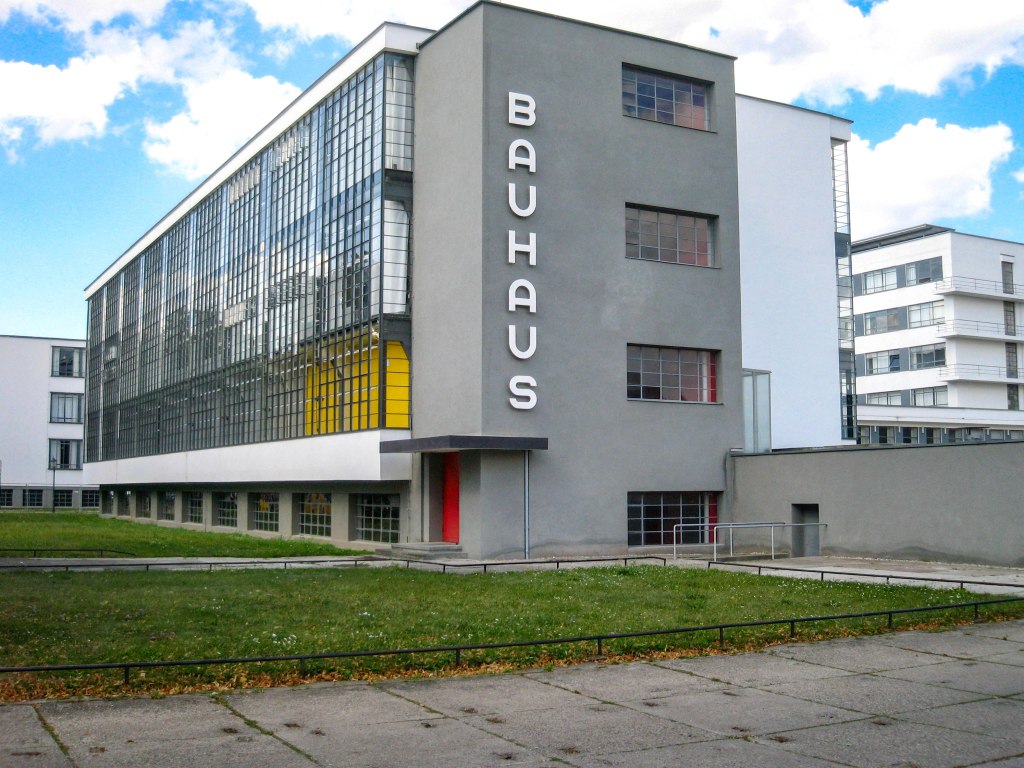
Bauhaus & Me #5 Workshops
As art and design courses are threatened by forces from either within or outside of their institution, they tend to curl inwards protectively. The advantage that Gropius and his successors had was that they ran an institution that was dedicated to the art, from architecture through to weaving. They understood and fostered lateral thinking and…
-
The Bauhaus and Me #3
Albers used paints straight from the tube showing how colour against colour changed perception of each in juxtaposition. Seeing change in a stable situation suggested that change in life could be seen too when it seemed unchanging. As one critic remarks, when these painting appeared in the 1950’s it marked the end of the Bauhaus…

